
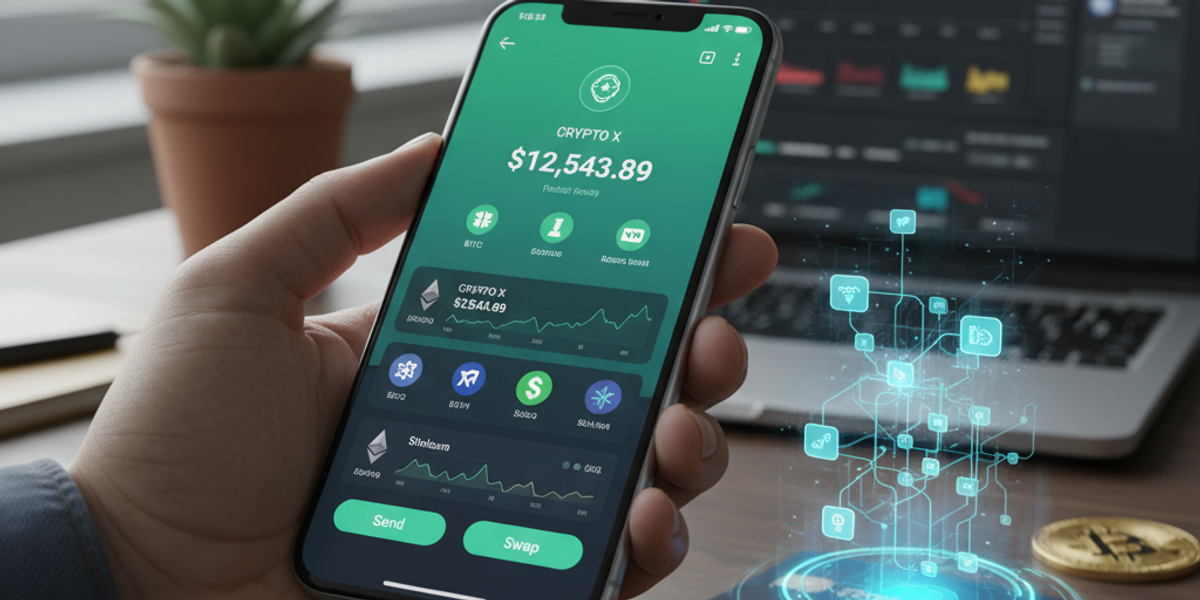
Online Crypto Wallets: Are They Safe? A Comprehensive Security Guide

Understanding both the benefits and drawbacks of online crypto wallet is crucial for responsible crypto management.
Introduction
In the dynamic world of cryptocurrency, the question of “where to store my digital assets?” is paramount. Online crypto wallet, often referred to as “hot wallets,” offer unparalleled convenience, allowing users to access, send, and receive cryptocurrencies from virtually anywhere with an internet connection.
But with this convenience comes a critical question: Are online crypto wallets truly safe?
This comprehensive guide explores what online wallets are, their benefits, their security risks, and the essential measures every user should take to protect their digital assets.
What is an Online Crypto Wallet?
An online crypto wallet is a software-based solution for managing cryptocurrency. Unlike physical wallets that hold cash, crypto wallets store private keys — digital credentials proving ownership of cryptocurrencies on the blockchain and enabling transactions.
Because these wallets remain connected to the internet, they offer immediate accessibility and convenience. They generally appear in three main forms:
- •Web Wallets: Accessed through a browser; commonly provided by exchanges or wallet services.
- •Mobile Wallets: Apps on smartphones for on-the-go crypto management.
- •Desktop Wallets: Software installed on a computer; more secure than web wallets but still internet-connected.
Key Advantage: Their user-friendliness and accessibility make online crypto wallets ideal for active trading, frequent transactions, and interacting with decentralized applications (dApps).
The Allure and Risks of Online Crypto Wallets
Understanding both the benefits and drawbacks of online crypto wallet is crucial for responsible crypto management.
Why People Choose Online Wallets (The Upsides)
- •Convenience & Accessibility: Manage funds anytime, anywhere — perfect for traders and active users.
- •Ease of Use: Designed with simplicity in mind, making them beginner-friendly.
- •Integration: Many connect seamlessly with exchanges, dApps, and blockchain services.
- •Cost-Effective: Most are free, offering easy entry for new users.
Understanding the Risks (The Downsides)
While convenient, their internet connectivity introduces specific vulnerabilities:
Cybersecurity Threats
- •Hacking: Wallet providers or individual users can be targeted. Exchange hacks have led to massive losses.
- •Phishing: Fake websites and emails trick users into revealing private keys or credentials.
- •Malware & Viruses: Malicious software can log keystrokes or steal wallet data.
- •Brute-Force Attacks: Automated tools may attempt to guess passwords.
Custodial vs. Non-Custodial Risks
- •Custodial Wallets: The provider holds your private keys. Convenient, but you rely on their security. If compromised or shut down, your funds are at risk.
- •Non-Custodial Wallets: You control your private keys — giving you full control, but also full responsibility. Losing your seed phrase means permanent loss.
Centralization and User Error
- •Centralization Risk: Exchange-based wallets create single points of failure.
- •User Error: Mistakes like losing seed phrases or sending funds to the wrong address are irreversible.
Essential Security Measures for Your Online Crypto Wallet
Despite risks, online crypto wallet can be used safely — provided you follow strict security practices.
Best Practices for Enhanced Protection
- Strong, Unique Passwords: Use long, complex, unique passwords for every crypto-related account.
- Enable Two-Factor Authentication (2FA): Prefer app-based (Google Authenticator, Authy) or hardware 2FA (YubiKey) over SMS.
- Whitelist Addresses: Restrict withdrawals to pre-approved addresses only.
- Keep Software Updated: Regularly update wallet apps, operating systems, and antivirus tools.
- Beware of Phishing & Scams:
- •Verify URLs carefully and look for “https://”.
- •Ignore unsolicited messages asking for private keys or seed phrases.
- •Confirm authenticity through official websites.
- Use Reputable Wallets & Exchanges: Choose audited, established providers with strong reputations. [Internal Link: How to Choose a Crypto Exchange]
- Limit Hot Wallet Balances: Store only what you actively use; move larger holdings to cold storage.
- Secure Your Devices: Use antivirus protection and avoid public Wi-Fi during transactions.
- Backup Seed Phrases Offline: Write them down and store in secure, offline locations. [Internal Link: Best Practices for Crypto Security]
When to Consider Alternatives: Cold Storage
For large holdings, relying only on an online crypto wallet is risky. This is where cold storage — hardware or paper wallets kept offline — comes in.
Recommended Strategy:
- •Use online wallets for small, frequent transactions.
- •Use cold wallets for long-term, high-value storage.
This hybrid approach balances convenience and safety. [Internal Link: Guide to Hardware Wallets]
Choosing the Right Online Crypto Wallet
When selecting an online crypto wallet, evaluate these key factors:
- •Security Features: Encryption, 2FA, and whitelisting capabilities.
- •Reputation & Track Record: Longstanding providers with positive user feedback.
- •User Interface: Simple, intuitive designs reduce the risk of mistakes.
- •Supported Cryptocurrencies: Ensure compatibility with the coins you hold.
- •Customer Support: Reliable assistance for troubleshooting and recovery.
Conclusion: Balancing Convenience with Security
So, are online crypto wallets safe? The answer depends on your choices and practices.
They provide unmatched accessibility and flexibility, but their internet connectivity introduces unavoidable risks. By combining strong security habits — passwords, 2FA, phishing awareness, and strategic use of cold storage — users can confidently benefit from online wallets while minimizing exposure.
Ultimately, your crypto’s safety lies in your own hands.
Frequently Asked Questions (FAQ)
Q1: Are all online crypto wallets equally safe?
A1: No. Safety depends on the provider’s security infrastructure, wallet type (web, mobile, desktop), and user behavior. Non-custodial wallets offer more control but require greater responsibility.
Q2: What’s the difference between a hot and cold wallet?
A2: A hot wallet is connected to the internet (e.g., online wallet), while a cold wallet stays offline (e.g., hardware wallet), offering higher security but less convenience.
Q3: Can an online crypto wallet be hacked?
A3: Yes. Hacks can occur via phishing, malware, weak passwords, or compromised providers.
Q4: What should I do if my wallet is compromised?
A4: Move funds immediately to a new, secure wallet, change all passwords, enable stronger 2FA, contact your wallet provider, and report major losses to authorities.
Q5: Is it safe to store large amounts of crypto in an online wallet?
A5: No. Online wallets are best for small, active-use amounts. Large holdings should always be kept in cold storage.
Q6: How do I verify if a wallet provider is reputable?
A6: Check longevity, user reviews, transparency (security audits), strong customer support, and realistic service claims. Avoid unknown or unverified providers.